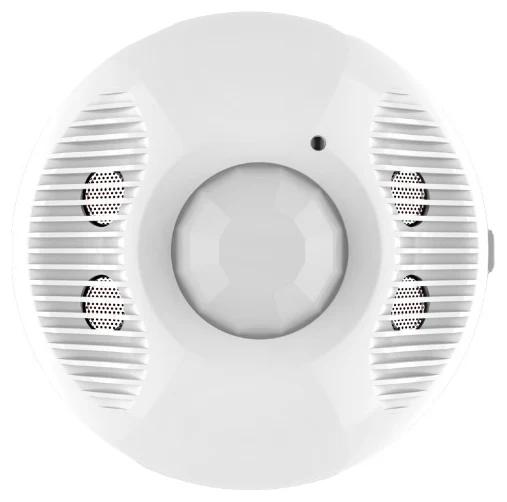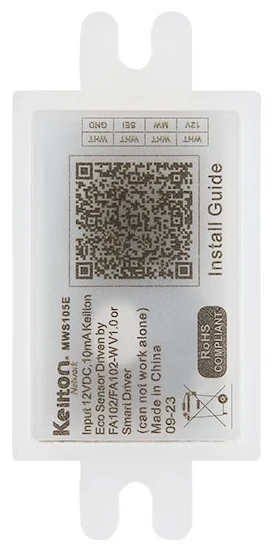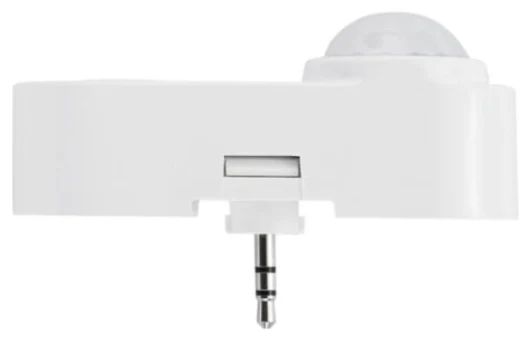
PIR sensors detect the heat radiated by people and are the robust standard solution for most indoor spaces with a clear line of sight. Ultrasonic sensors pick up even the smallest movements and can “see” around obstacles, but are more sensitive to air currents. Microwave sensors penetrate thin, non-metallic materials and are particularly suited to luminaire integration and greater mounting heights, but their sensitivity must be set carefully. Dual-tech sensors combine two methods, delivering the highest detection reliability with very few false switching events. Which technology is right depends on room geometry, use and sources of interference – this guide will help you decide.
Why sensor technology matters so much
A lighting control system is only as good as its occupancy detection. Two types of error determine user acceptance:
- False negative (unwanted switch-off): people are present, the sensor fails to detect them and the lights go out. This leads to complaints and, in the worst case, to the automatic control being bypassed.
- False positive (false triggering): nobody is there, yet the lights switch on or stay on – caused by draughts, heater fans or movement in the room next door, for example. This wastes energy.
The choice of technology shifts the balance between these two types of error. Evaluation algorithms also play a part: Keilton+autani sensors, for example, use AlgoH or AlgoH2 to maximise detection and reduce false alarms.
PIR: passive infrared
Operating principle
A PIR sensor does not emit anything itself. It uses a pyroelectric element to measure changes in the infrared heat radiation within its field of view. A lens in front of it – usually a Fresnel lens – divides the field of view into many individual zones. When a person moves from one zone into the next, the signal changes, and the electronics interpret this as movement.
Strengths and limitations
- Strengths: low power consumption (ideal for battery-powered devices too), unaffected by air currents, clearly definable detection area, does not see through walls or glass.
- Limitations: requires a direct line of sight. Shelving, partitions or tall monitors create “blind spots”. Movement across the sensor (tangential) is detected better than movement directly towards it (radial).
PIR is the basis of most Keilton+autani sensors, such as the battery-powered ceiling sensor BCS107, the LLLC sensors IFS108 and IFS105SE, and the high-bay sensors EFS104 and EFS106. With high-bay sensors, interchangeable lenses determine which mounting height and detection field are covered.
Ultrasonic
Operating principle
Ultrasonic sensors are active sensors. They emit sound waves in the inaudible frequency range above 20 kHz and evaluate the reflected waves. When an object moves, the frequency of the echo shifts (Doppler effect) – and the sensor detects movement.
Strengths and limitations
- Strengths: detects very small movements; the sound fills the room and is reflected off surfaces, so areas behind partitions or furniture are covered too. Well suited to washrooms with cubicles and irregularly shaped rooms.
- Limitations: air movement from ventilation outlets, windows or fans can cause false triggering. The method loses effectiveness in very large, open halls. Soft, sound-absorbing surfaces reduce the range.
Microwave (HF / radar)
Operating principle
Microwave sensors emit high-frequency electromagnetic waves and likewise evaluate the Doppler effect in the reflections. Unlike ultrasound, microwaves penetrate thin, non-metallic materials such as plastic, glass or lightweight partition walls.
Strengths and limitations
- Strengths: very sensitive, independent of temperature, and can be installed invisibly behind plastic covers or inside luminaires. This makes microwave particularly suitable for integration into luminaires.
- Limitations: penetration is both an advantage and a disadvantage. Movement behind walls, in the neighbouring room or from passing vehicles can be detected. Moving objects such as fan blades or vibrating components may also trigger the sensor. Careful sensitivity adjustment is therefore essential.
The Keilton+autani Eco sensor MWS105E is one such microwave sensor: detection range up to 15 m, mounting height up to 6.5 m, sensitivity adjustable from 0 to 100% via the app, plus delay time and two-level dimming. As a non-Bluetooth device, it works together with a Bluetooth controller such as the FA102, which sits inside the luminaire.
Dual-tech: the best of both worlds
Dual-tech sensors combine two methods, usually PIR and ultrasonic. The logic is typically asymmetric:
- Switch on only when both technologies detect movement (or PIR triggers unambiguously) – this prevents false triggering from draughts or adjacent areas.
- Hold occupancy for as long as at least one technology still detects movement – this prevents unwanted switch-offs when people are sitting still.
The Keilton+autani EFS107E is a 12 V dual-tech ceiling sensor with PIR and ultrasonic. It covers rooms with an area of up to 56 m², features daylight control and is powered via a luminaire controller. The AlgoH algorithm is designed to maximise detection while reducing false alarms.
Comparison table
| Criterion | PIR | Ultrasonic | Microwave | Dual-tech (PIR + US) |
|---|---|---|---|---|
| Principle | passive, heat radiation | active, sound, Doppler | active, HF waves, Doppler | combination |
| Line of sight required | yes | no | no | partly |
| Small movements | good | very good | very good | very good |
| Penetrates materials | no | no (reflects) | yes, non-metallic | no |
| Susceptible to | obstacles, radial movement | air currents | movement behind walls, vibration | low |
| Power consumption | very low | medium | medium | medium |
| Typical rooms | offices, corridors, halls | toilets, irregular rooms | luminaire integration, corridors, ancillary rooms | open-plan, meeting rooms, classrooms |
The ratings reflect typical characteristics of each method. Actual behaviour depends on the specific product, its lens or antenna and its evaluation logic.
Choosing by room type
Single and double offices
There is usually a clear view of the workstation. A PIR presence detector with a fine-segmented lens is generally sufficient. Position is important: ideally above or to the side of the workstation, not above the door.
Open-plan offices
Many workstations, partitions and monitors. Here, either dual-tech sensors or a dense grid of PIR sensors at luminaire level are a good choice. The LLLC concept – one sensor per luminaire – solves the problem of blind spots through redundancy (see LLLC / NLC5 explained).
Meeting rooms and classrooms
Long periods with little movement. Dual-tech is the safe choice here, because ultrasonic holds occupancy even with minimal movement.
Washrooms
Cubicles block the line of sight. Ultrasonic or dual-tech sensors also detect people inside closed cubicles.
Corridors and stairwells
Clear directions of movement and short stays. PIR is sufficient as long as the sensor is positioned so that people walk across the detection area. Alternatively, microwave sensors integrated into luminaires can be used.
Halls, warehouses and production areas
Great mounting heights, racking aisles, forklift traffic. Specialised high-bay PIR sensors with interchangeable lenses are the tool of choice here – find out more in our guide high-bay sensors for warehouses and industrial halls.
Installation and adjustment: common sources of error
Even the best technology fails if it is installed incorrectly. Pay attention to the following:
- Observe the mounting height: every sensor is specified for a particular height range, e.g. 2 to 5 m for the IFS108 and IFS105SE, or 5 to 22 m for the EFS106. Outside this range, the detection field and sensitivity change.
- Avoid sources of interference: do not mount sensors directly next to ventilation outlets (ultrasonic), radiators or warm-air blowers (PIR), or vibrating components (microwave).
- Plan for overlap: the detection areas of neighbouring sensors should overlap so that there are no gaps. The grid planner will help you with this.
- Balance sensitivity and hold time: high sensitivity with a short hold time is usually better than low sensitivity with a long hold time.
- Fine-tune after occupation: furniture and usage change. A follow-up check a few weeks after move-in will reveal any unwanted switch-offs.
Thinking about technology and networking together
Sensor technology determines detection; networking determines how useful the data is. Networked sensors can complement one another: if one sensor in a group detects occupancy, the whole zone stays on. This compensates for the weaknesses of individual sensors. With Bluetooth Mesh, this works without any additional control cabling. For a direct side-by-side comparison of products, use the product comparison tool.
Conclusion
There is no universally best sensor technology. PIR is robust, economical and the first choice for most rooms with a clear line of sight. Ultrasonic comes into its own in irregularly shaped rooms, and microwave excels at invisible integration into luminaires. Dual-tech offers the highest detection reliability wherever people sit still for long periods. The key is to choose the technology to suit the room, its use and any sources of interference – and to plan installation and adjustment as carefully as the product selection.
Try it interactively
Sensor finder
Frequently asked questions
Which presence detector is better: PIR or microwave?
It depends on where it is used. PIR is robust, energy-efficient and only detects what it can see directly – ideal for rooms with a clear line of sight. Microwave is more sensitive and can be integrated invisibly into luminaires, but it can detect movement through thin walls and must therefore be adjusted carefully.
What is a dual-tech presence detector?
A dual-tech detector combines two detection methods, usually PIR and ultrasonic. Typically, it only switches on when both methods detect movement and keeps the lights on as long as one of them still registers movement. This reduces both false triggering and unwanted switch-offs.
Can a microwave sensor detect through walls?
Yes, microwaves penetrate thin, non-metallic materials such as glass, plastic or lightweight partition walls. As a result, movement in the neighbouring room can be detected. This effect can be limited by reducing the sensitivity, which on the MWS105E is adjustable from 0 to 100 per cent.
Why does my PIR sensor not detect people at their desks?
PIR sensors need a line of sight and respond to changes between detection zones. Tall monitors, partitions or too great a distance prevent small movements from being detected. The remedy is a better sensor position, a denser sensor grid or a dual-tech sensor.
Which sensor is suitable for toilets with cubicles?
Ultrasonic or dual-tech sensors are suitable for washrooms with cubicles, because sound is reflected off surfaces and therefore also detects people inside closed cubicles. A PIR-only sensor cannot see into the cubicles and frequently causes unwanted switch-offs.