LLLC stands for luminaire level lighting control. The principle: every luminaire is given its own networked occupancy and daylight sensor, turning it into an independent, intelligent node on the network. NLC5 refers to the fifth generation of technical requirements for Networked Lighting Controls issued by the North American DesignLights Consortium (DLC), in which LLLC is listed as a separate category. For lighting designers, installers and luminaire manufacturers in Europe, LLLC is interesting above all because it offers the finest control resolution with the lowest installation effort. This guide explains the terminology, architecture, benefits and planning considerations.
Getting the terminology right
What exactly is LLLC?
The DLC follows the definition of the Northwest Energy Efficiency Alliance (NEEA): with luminaire level lighting control, every luminaire has a networked occupancy sensor and an ambient light sensor, which are integrated into the luminaire or attached directly to it at the point of manufacture. The luminaire makes its own control decisions while communicating with other luminaires on the network.
What does NLC5 mean?
The DLC publishes technical requirements that networked lighting control systems must meet to be included on the DLC Qualified Products List. This list is particularly relevant in North America, because many incentive programmes refer to it. Version 5 (NLC5) and its updates (currently V5.2) define required functions and functions that must be reported – such as networking, occupancy sensing, daylight harvesting, dimming, scheduling and energy monitoring. Systems with LLLC are identified separately.
Architecture: centralised, room-based or luminaire-based
| Feature | Centralised / bus | Room sensor (zone) | LLLC (luminaire level) |
|---|---|---|---|
| Sensors | few, distributed around the room | one per room or zone | one per luminaire |
| Control resolution | room / group | zone | individual luminaire |
| Control cabling | required | partly | not required (wireless) |
| Daylight zones | must be planned | must be planned | arise automatically |
| Change of use | rewiring or reprogramming | reprogramming | regrouping via app |
| Detection density | low | medium | high, redundant |
| Installation effort | high | medium | low (luminaire = sensor) |
The benefits of LLLC in detail
1. Greater savings through finer control
When every luminaire takes its own measurements, it delivers exactly the light that is missing at its location. Luminaires near windows dim further than those deeper in the room, and luminaires above unoccupied workstations can drop to a background level. An analysis of metered data from 194 buildings in North America, published by NEEA and the DLC in 2020, found average savings of 49% for networked lighting controls and 63% for networked systems with LLLC. These figures relate to the projects studied and cannot simply be transferred to other projects, but they do show the scale of the additional benefit.
2. No additional planning or wiring effort for sensors
With LLLC, every luminaire comes with its own sensor. Sensor planning therefore follows the lighting design – a separate sensor grid is largely unnecessary. In combination with Bluetooth Mesh, no additional control cabling is required.
3. Redundancy and user acceptance
Because many sensors monitor the same area, blind spots of individual sensors hardly matter. The luminaires in a group share their occupancy information, so the group stays on as long as any sensor detects occupancy.
4. High-resolution data
Every sensor is a data point. Occupancy and energy data are therefore available at luminaire resolution – a sound basis for space management and energy reporting (see energy monitoring and occupancy data).
Implementation with Keilton+autani
The Keilton+autani range offers several ways to make a luminaire LLLC-ready:
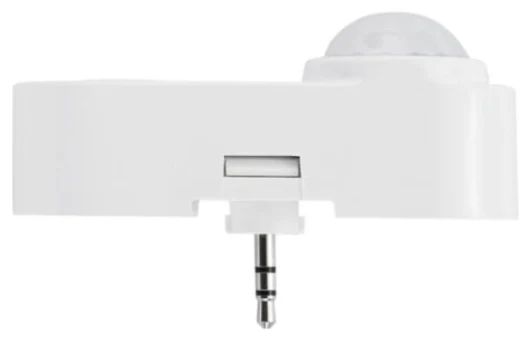
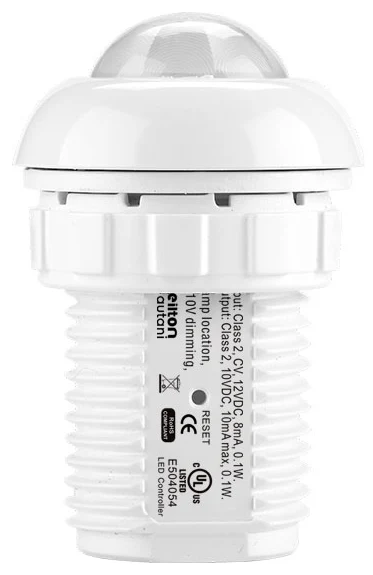
- IFS108: compact sensor with AUX interface, PIR detection and daylight harvesting, designed for LLLC/NLC5 and particularly suitable for office luminaires. Mounting height 2 to 5 m, 12 V DC input, plug-and-play with a pre-installed sensor connection.
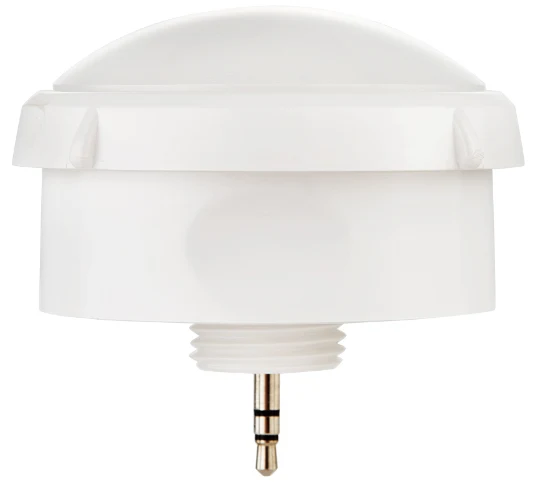
- IFS105SE: round indoor sensor for LLLC with PIR and daylight harvesting, also for 2 to 5 m. Optionally available with a ceiling bracket and connecting cable to the driver.
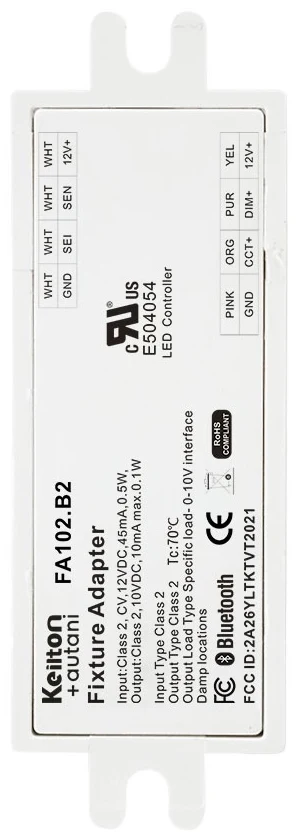
- FA102: miniature Bluetooth node for installation in the luminaire. Powered via 12 V DC from dimmable LED drivers with dim-to-off functionality; outputs, depending on the variant, are 0–10 V, dual 0–10 V or PWM. The FA102 is “sensor-ready” and connects Eco sensors such as the MWS105E microwave sensor.
- EFS106: high-bay sensor with AUX interface for LLLC/NLC5 at mounting heights of 5 to 22 m – the LLLC approach for industrial halls and warehouses.
Planning an LLLC installation
Luminaire selection and drivers
The prerequisite is a dimmable LED driver that matches the interface of the sensor or node. For Keilton+autani sensors with a 12 V input, the driver should provide a suitable auxiliary supply. Also check the dimming range and dim-to-off behaviour.
Mounting height and field of view
Detection is tied to mounting height. With suspended pendant luminaires, the height above the floor changes – check that it falls within the sensor’s specified range. With deep-bodied luminaires, the sensor must not be obscured by louvres or diffuser grids.
Groups and profiles
Even with LLLC, luminaires rarely work in complete isolation. They are typically grouped by room or work area: all luminaires in a group respond to occupancy together but regulate daylight individually. Define background light levels for unoccupied neighbouring areas so that large spaces do not look like “islands of light”.
User control
Despite the automation, users need a way to intervene. Battery-powered wireless push buttons such as the WP108E can be mounted on any wall without running cables and assigned to lighting groups.
From factory to site: a typical workflow
LLLC shifts work from the construction site to luminaire manufacturing. A typical workflow looks like this:
- Luminaire development: the luminaire manufacturer defines the sensor position, cable routing and driver, and tests wireless and detection performance on a sample.
- Manufacturing: the sensor or node is fitted and connected at the factory. With plug-and-play connections, this takes just a few simple steps.
- Installation: the electrical contractor installs the luminaire just like an uncontrolled luminaire – a mains connection is all it needs.
- Commissioning: luminaires are registered via the app, assigned to rooms and groups, and given profiles for occupancy, daylight and hold times.
- Operation: the operator adapts groups and profiles when the use of a space changes, without an electrician needing to touch the wiring.
This workflow shortens construction time and reduces sources of wiring errors. Installers no longer need to coordinate a separate sensor plan with the lighting layout, and tender specifications become simpler for designers, because the luminaire and sensor can be specified as a single unit.
LLLC in existing installations: Enlighted
Enlighted systems also work on the LLLC principle: the sensors are built into the luminaires and control the dimmable driver via DALI or 0–10 V. Enlighted Eazy is an app-based variant with laser-based commissioning and handover to the customer via QR code. Building Robotics Europe provides service and support for existing Enlighted installations until 30 September 2035 – find out more under Enlighted support.
Limitations of LLLC
- Unit costs: one sensor per luminaire means more sensors than a room-based solution. The higher hardware costs are usually offset by lower installation effort and greater savings, but must be assessed on a project-by-project basis.
- Very small rooms: in a toilet with a single luminaire, LLLC offers no advantage over a standalone sensor.
- Luminaires without a suitable interface: not every existing luminaire can be retrofitted cost-effectively. Here, separate ceiling or battery-powered sensors such as the BCS107 are often the better choice (see retrofitting lighting controls in existing buildings).
You can estimate which solution makes economic sense with the savings calculator, or compare options side by side in the product comparison.
Conclusion
LLLC moves the intelligence to where the light is produced: into the luminaire. The result is very fine-grained daylight and occupancy control, high redundancy, detailed data and – combined with wireless – minimal installation effort. The DLC’s NLC5 requirements provide a helpful frame of reference, even though they are not mandatory in Europe. For luminaire manufacturers, it pays to plan sensor-ready luminaire families early; for designers and operators, LLLC is often the most convincing architecture, both economically and technically, in offices, schools and industrial halls.
Frequently asked questions
What does LLLC mean in lighting control?
LLLC stands for luminaire level lighting control. Every luminaire has its own networked occupancy and daylight sensor and regulates itself individually. At the same time, the luminaires share occupancy information across the network.
What is NLC5?
NLC5 is the fifth version of the DesignLights Consortium’s technical requirements for networked lighting control systems. It sets out required and reported functions such as networking, occupancy sensing, daylight harvesting and energy monitoring. The current update is V5.2.
How much does LLLC save compared with other lighting controls?
An analysis published by NEEA and the DLC in 2020, using metered data from 194 buildings, found average savings of 49 per cent for networked lighting controls and 63 per cent for systems with LLLC. Actual figures depend heavily on the project and cannot be transferred directly.
Does LLLC require additional control cabling?
Not necessarily. With wireless systems such as Bluetooth Mesh, the luminaires communicate with one another wirelessly. The luminaire then only needs its mains supply, plus a dimmable driver with a suitable interface and an auxiliary supply for the sensor.
Is DLC certification required in Germany or Europe?
No, a DLC listing is mainly relevant for incentive programmes in North America. However, the NLC requirements are a useful, manufacturer-neutral benchmark for the functions of a professional networked lighting control system.